Here is the advocacy we’ve been apart of, including templates you can use for your own work.
Education is a democratic project. We should have a say in shaping what our children learn.
We can limit the uncritical integration of AI into educational spaces in this country. New York has been the leader in protecting kids from technological abuses: New York City implemented a successful bell-to-bell cell phone ban this year, and the SAFE for Kids Act, which bans addictive algorithms for children, passed the state legislature this year. Thirty-one other states have also taken action to ban phones in schools.
We can be the leaders in the movement to protect our kids from the dangers of AI.
5 Things you can do right now
- Do some research. Find out how Ai is being used at your school, whether your kids are using it, and figure out how you feel about it and what your boundaries are. Decide not to use AI in your own work, and see what happens–like this teacher who banned AI in her classroom for a year.
- Partner with likeminded people. Find parents who are on the same page and figure out a) your strategy and b) your ask. We are in the process of writing opt-out letters and school board resolutions that you can use. If you create your own, we’d love to see it.
- Start a conversation. AI is not inevitable, and we can talk about alternative futures where education is meant to create democratic citizens capable of critical thinking, deep thought, and creativity. AI doesn’t help us get there.
TALK TO YOUR KIDS. Show them the research. Buy them books. Spend money on extra-curriculars. Consider not buying them phones (and tell them why). Show them that you’re doing things without AI.
FIND OUT how AI is being used in your kids’ schools. Be nosy. Some schools assume parents want their kids to use the technology–explain why that’s not the case. If teachers are using it, explain the biases in grading. A few voices can puncture the sense of inevitability. - Get involved. Ask local politicians, write letters to the editor (like this one demanding a moratorium on AI written by an NYC teacher and climate change activist), show up at school board meetings and PTA meetings.
- Ask questions about the curriculum.
- Write open letters expressing your concerns (like this one addressed to American Federation of Teachers President Randi Weingarten, written by NYC teachers).
- Invite us to give a talk to a local group!
- Robert Carroll has introduced a first-in-the-nation bill to ban student-facing AI in the lower grades—reach out to your representatives and ask them to support this bill or something like it!
- Sign this petition to resist Trump’s executive order to limit the ability of states to regulate AI independently.
- You can see how Chicago parents are organizing against AI mental health care in public schools here.
- Remember that change can happen. We tend to forget good news stories–but science has led to unbelievable successes. New York banned cell phones bell to bell, and it’s actually going really well! We were able to close the hole in the ozone layer. If we work together, it’s possible to resist AI in schools as well.
Use the form below to share resources or news about AI in public or private education spaces. Let us know if you’d like to be part of organizing events, informational calls, or to subscribe to a potential future newsletter.
The goal is to have the first organizing call in November 2025, so sign up here!
We’re also available to speak to organizing groups, school boards, and or one-on-one – just reach out here or via email at parentsforaicaution [at] gmail [dot] com.
How Teachers and Professors are Talking about AI
A gorgeous graphic that Nick Sousanis is including in his syllabus:
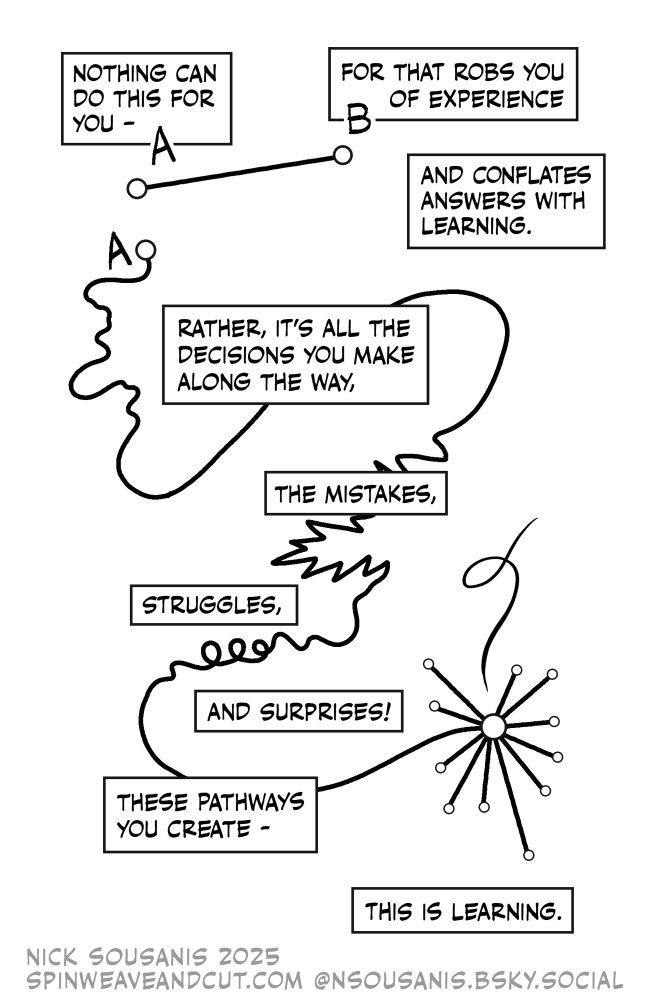
A syllabus that outlines a critically engaged approach to AI (and asks students not to engage with it). Other assignments to resist AI can be found here.
How Writers and Reserchers are Taking Action
Read this gorgeous essay in the Dublin Review of Books by Katja Bruisch, who declined to let Cambridge feed her new book into AI. She writes: “I had learned enough to feel certain I should cultivate rather than overcome my scepticism about the technology. I also understood that any valuable critique should go beyond the moral panic surrounding student essays that prevails in Higher Education and scrutinise the political economy driving GenAI.”
How Actors and Artists are Speaking Out
Click here for the artist perspective on AI.
 PACES
PACES 